
Maryland roofs take a beating. Humid summers grow algae, freeze-and-thaw cycles work at every seam, and the occasional hailstorm or wind event does damage you might never notice from the ground. The good news is that a failing roof almost always warns you before it leaks. Here are the signs worth watching for, most of which you can check from the ground or a ladder.
1. Curling or lifting shingles
Shingles should lie flat. When the edges curl up or the corners lift, the shingle has lost its flexibility and its seal, usually from age and heat. Curled shingles catch wind and let water track underneath. Once a slope starts curling in more than one spot, the roof is telling you it is near the end.
2. Bald patches where the granules are gone
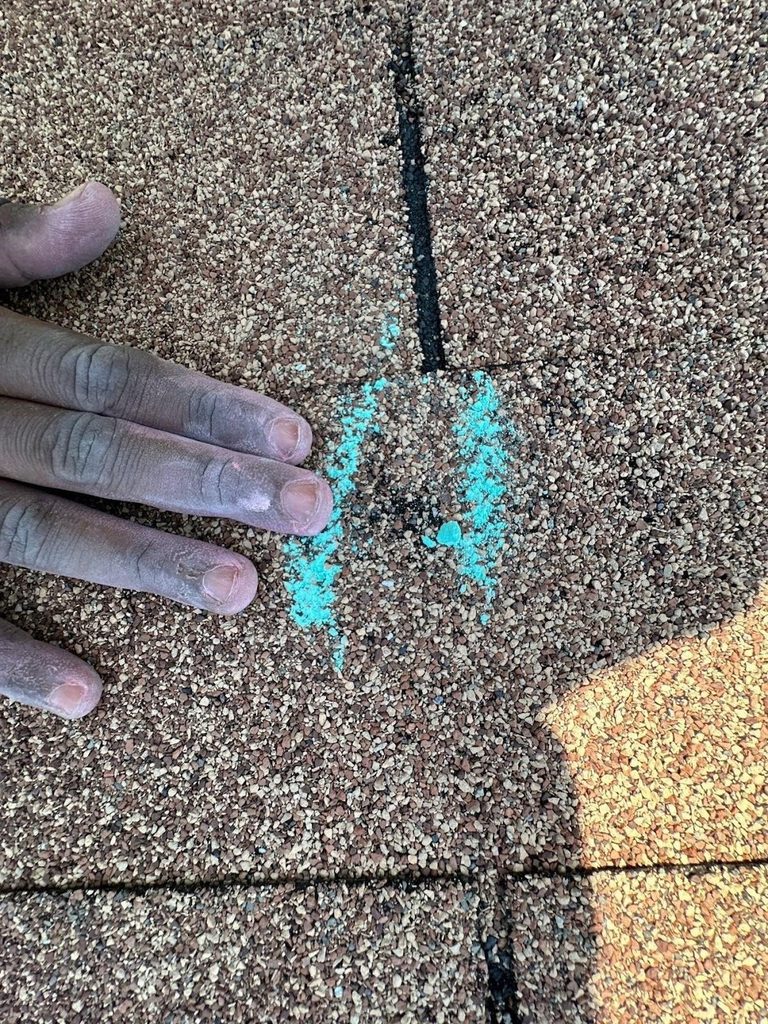
Those sandy granules are the shingle’s sunscreen. As they wear off you see smoother, darker patches, and you find the granules themselves collecting at the bottom of the slope where the roof drains. A little loss on a new roof is normal. Wide bald areas on an older roof mean the shingles are breaking down and no longer protecting the mat underneath.
3. Dark streaks and moss
In a humid climate like Maryland’s, black streaks are usually algae, and the green fuzz on the north-facing slopes is moss. Streaking is mostly cosmetic at first. Moss is more serious, because it holds moisture against the shingles and lifts their edges as it grows. Left alone, it shortens the life of the roof.
4. Ceiling stains and attic daylight
Some of the best clues are inside. A brown ring on a bedroom ceiling, or a musty smell in an upstairs closet, points to water getting in. Better yet, go into the attic on a sunny day with the lights off. If you can see daylight through the roof boards, water is finding that same path. Damp insulation or dark streaks on the rafters tell the same story.
5. Sagging or uneven rooflines
Stand across the street and look at the ridge and the slopes. A healthy roof runs in straight lines. A dip, a sag, or a wavy plane suggests the decking under the shingles has been soft for a while, often from water that got in long ago. This one is not a wait-and-see item, since it points to a problem in the structure and not just the surface.
6. Failing flashing around chimneys and vents
Most leaks do not start in the open field of shingles. They start at the transitions, where the roof meets a chimney, a skylight, a vent, or a wall. The metal flashing at those spots is the first thing to fail. Rust, gaps, or loose sections around a chimney base are a common source of a leak that seems to come from nowhere.
7. You simply do not know how old it is
If you bought the house and never learned the age of the roof, and it has been fifteen years or more, that alone is reason to have it looked at. An asphalt roof does not owe you anything past its service life, and Maryland weather is not gentle with the years it does have.
What to do about it
One of these signs is worth watching. Two or three together usually means it is time for a professional set of eyes, ideally before a small problem becomes an interior repair. A roofer can tell you whether you are looking at a spot fix, a few more good years, or a roof replacement in Columbia, Maryland. Many local Maryland crews will inspect a roof at no charge, so there is little reason to guess.
A roof gives you plenty of warning. Catch these signs early and you get to plan the work on your own terms, instead of scrambling with a bucket during the next storm.