
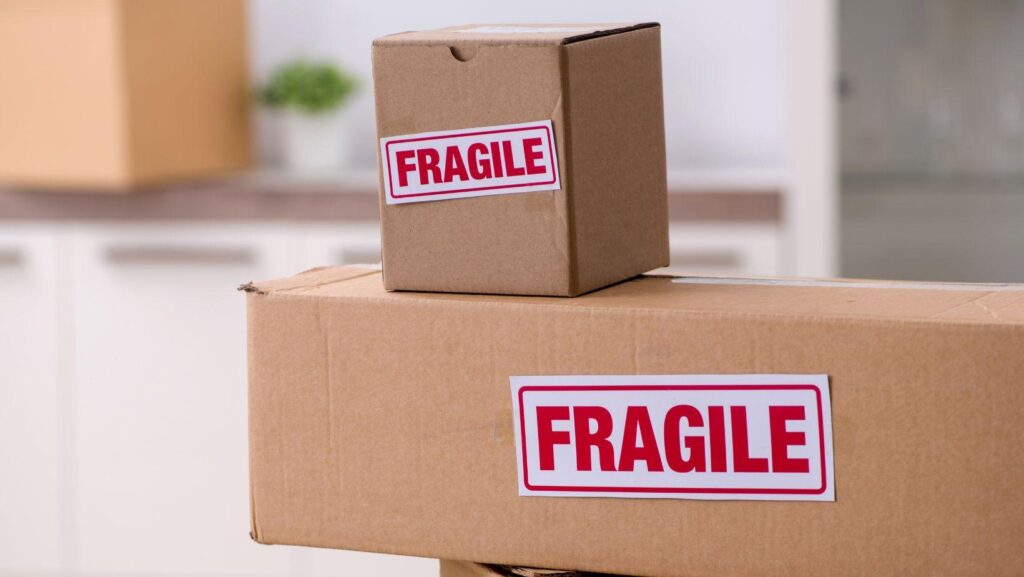
To pack fragile items so nothing breaks during a house move, use strong double-walled boxes, wrap every item individually in clean packing paper or bubble wrap, pad the base and top of each box, fill every gap so nothing can shift, keep boxes light enough to carry comfortably and label them clearly as fragile with the correct way up. Plates should be packed on their edges, glasses wrapped one by one, and mirrors and pictures protected with corner guards and rigid board.
Most breakages happen because items move inside the box or because boxes are too heavy and get dropped. If contents can't shift and each box is a manageable weight, the risk of damage drops dramatically, even over a long journey.
Get the Right Packing Materials Before You Start
Good materials make the biggest difference. Double-walled cardboard boxes are much stronger than single-walled supermarket boxes, which can crush or split under weight. Smaller boxes are best for fragile items, as they keep weight down and reduce the space for things to move around.
Stock up on unprinted packing paper, bubble wrap and strong packing tape. Newspaper is tempting because it's free, but ink can transfer onto china and glass, leaving marks that are hard to remove. Tissue paper is useful for delicate ornaments and anything with a fine finish. For glasses and mugs, cardboard dividers or cell inserts help keep items separated.
Specialist boxes are worth considering for certain items. Dish packs, often called double-walled china boxes, are designed for plates and bowls. Mirror and picture boxes protect flat items, and wardrobe boxes are handy for clothing and soft items that can double as padding. Buying everything before you start saves you from improvising halfway through, which is when mistakes tend to happen.
Packing Plates, Glasses and Kitchenware
Start every box by lining the bottom with a thick layer of crumpled paper. This creates a cushion that absorbs shocks when the box is set down. Wrap each plate individually, then pack them standing on their edges, like records in a crate, rather than stacking them flat. Plates are much stronger along their edge, and this method reduces the risk of them cracking under pressure.
Bowls can be nested with paper between them, while cups and mugs should be wrapped one at a time, with handles padded carefully since they break easily. For glasses, stuff the inside with paper, then wrap the outside. Wine glasses need extra care around the stem, where a little extra padding prevents snapping.
Once the box is full, add more crumpled paper on top and around the edges. Close the lid and give it a gentle shake. If you can hear or feel anything moving, open it up and add more padding. Keep kitchen boxes to a weight that one person can lift comfortably, ideally no more than around 15 to 20 kilograms.
Mirrors, Artwork and Glass-Fronted Furniture
Mirrors and framed pictures are some of the most commonly damaged items during a move. Protect the corners first, using cardboard corner guards, then wrap the entire item in bubble wrap. Place it between sheets of rigid cardboard or in a purpose-made picture box, and fill any remaining space so it can't slide.
Taping an X across glass is a common tip, but it doesn't stop glass breaking. At most, it can help hold shards together if something does crack. Proper padding and rigid protection are far more effective. Oil paintings and canvases need different care, as bubble wrap pressed directly against paint can leave marks. Many people use acid-free paper or glassine as a first layer before adding padding.
For valuable artwork, antique mirrors or a large number of fragile pieces, professional packing can be worth the investment. Removal firms such as Dumond Moving and Storage can often handle the packing of delicate items as part of a move, using the right materials and techniques so pieces are protected from the moment they leave the wall until they're safely unpacked. Glass-fronted cabinets and display units should be emptied completely, with any removable glass shelves wrapped and packed separately.
Lamps, Electronics and Awkward Ornaments
Lamps have several vulnerable parts, so take them apart before packing. Remove bulbs and shades, then wrap the base separately. Lampshades are easily crushed, so pack them in their own box with soft padding and nothing heavy on top.
Electronics are safest in their original boxes if you still have them, as the moulded inserts are designed to protect them. If not, wrap each item well and pad the box on all sides. Before disconnecting televisions, computers and sound systems, take photos of the cable setup so reconnecting everything is quick and easy at the new property. Televisions should travel upright rather than flat, with the screen protected by padding or a purpose-made cover.
Ornaments, figurines and decorative pieces with thin or protruding parts need extra attention. Wrap delicate details, such as handles, arms or spouts, with tissue first, then wrap the whole item. Packing several small ornaments together in a small box with plenty of padding is safer than scattering them through larger boxes of mixed items.
Labelling, Loading and Unpacking Safely
Clear labelling helps everyone handle boxes correctly. Mark fragile boxes on several sides, including the top, and add arrows showing which way up the box should travel. Write the room each box belongs in, so it can go straight to the right place instead of being moved several times.
When loading, fragile boxes should go on top of heavier, sturdy boxes, never underneath them, and should be packed tightly enough that they can't slide around during the journey. For very sentimental or irreplaceable items, such as family heirlooms, consider transporting them in your own car where you can keep a close eye on them.
Check your insurance cover before moving day, including whether items you pack yourself are covered for breakage, since policies vary. When you arrive, unpack fragile boxes in a clear area rather than on a crowded floor, and check each item as you remove it so any damage can be recorded promptly.
A week before your move, walk through each room and make a list of fragile items, noting which ones need special materials or extra care. Packing these carefully and early, rather than in the final rushed hours, is the simplest way to make sure everything arrives in the same condition it left.