
Rising energy costs have made utility bills a growing concern for renters in 2025 – especially for those searching for apartments for rent and trying to balance comfort with affordability. The good news is that lowering electric and gas bills doesn’t require major renovations or risking your security deposit. With a few smart, low-cost adjustments, renters can make a noticeable impact on energy use while staying fully lease-compliant.
This guide focuses on practical, reversible changes that deliver real savings, from sealing drafts and fine-tuning thermostat settings to cutting wasted power from everyday electronics. It also highlights why a simple property inspection – both before moving in and during your lease – can help identify energy inefficiencies early.
Whether you’re preparing to sign a new lease or looking to improve your current rental, these renter-friendly strategies can help you save money, reduce waste, and make your apartment more comfortable year-round.
Lighting, Appliances, and Hot Water: Everyday Savings
Daily habits around lighting, laundry, and hot water can easily add up to 10–20% savings without any comfort sacrifice. These are the changes you make once and benefit from forever.
LED Bulbs: Still the Best Investment
Swapping any remaining incandescent or halogen bulbs for ENERGY STAR rated LED bulbs remains one of the best returns on investment in home energy efficiency. LEDs use about 75–80% less energy and last years longer.
At $2–$5 per bulb, you’ll recoup the cost in months. Better yet, these bulbs can move with you to your next rental. Swap back the original bulbs before move-out if your lease requires it.
Laundry and Dishwasher Efficiency
About 90% of the energy used in traditional laundry goes to heating water. Washing clothes in cold water on “normal” or “eco” cycles handles everything except heavily soiled items just fine.
Simple laundry habits can have a meaningful impact on your energy use and utility bills. Washing clothes with cold water eliminates up to 90% of the energy typically used in a wash cycle, while running only full loads reduces the number of cycles needed, saving both water and electricity.
Using a high-spin cycle helps extract more water from clothes, which shortens drying time, and air drying whenever possible removes dryer energy use altogether. Together, these small changes add up to noticeable savings over time.
Consider air-drying at least part of each load – shirts, linens, and delicates – on a folding drying rack or tension rod. In summer, this also reduces the heat your dryer adds to your apartment, which means less work for your cooling system.
Hot Water Savings
If you have access to your water heater (some apartments have units in closets), check the temperature setting. The ideal temperature is 120°F – anything higher wastes energy and increases scald risk. Lowering from the typical over-140°F factory setting to 120°F can cut water heating costs by 7–10%.
Other hot water wins:
- Shorter showers (5–10 minutes instead of 20)
- Installing a removable low-flow showerhead (saves 30–40% on water heating energy, swap back the original at move-out)
- Fixing any dripping faucets promptly – a hot water drip wastes both water and energy
Use Fans, Ventilation, and Sunlight Wisely
Fans cool people, not rooms. This simple fact means you should turn fans off when leaving a room – otherwise, you’re paying for electricity that benefits no one.
Ceiling Fan Strategy
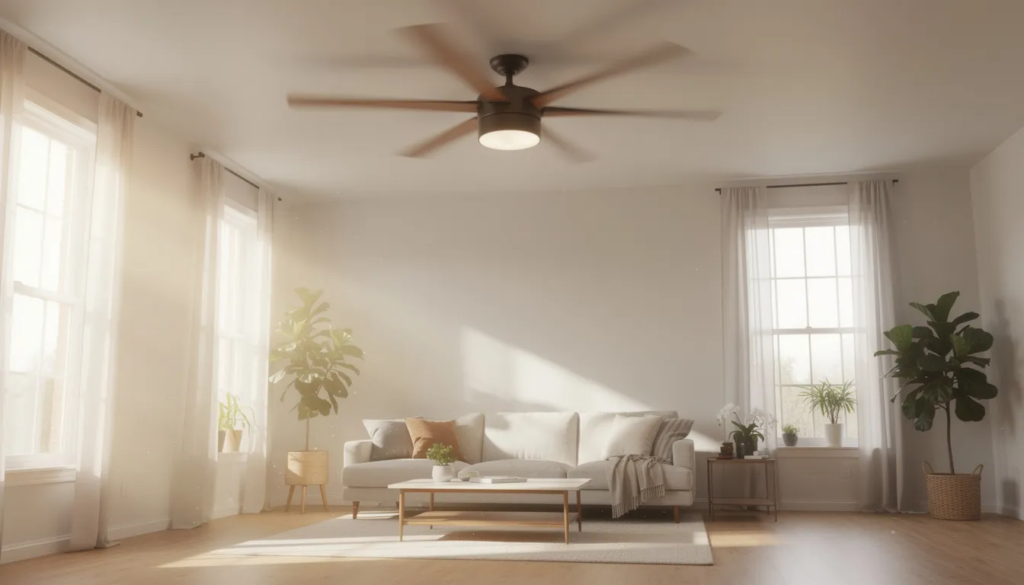
Most ceiling fans have a direction switch on the motor housing:
Ceiling fan settings should change with the seasons to improve comfort and reduce energy use. In summer, set the fan to rotate counterclockwise at a medium to high speed to create a downdraft breeze that can make a room feel 4–6°F cooler without lowering the thermostat.
In winter, switch the fan to rotate clockwise at a low speed so it gently pushes warm air down from the ceiling, helping distribute heat more evenly and improve efficiency.
The winter setting is especially useful in rooms with high ceilings where warm air collects above head level.
Kitchen Exhaust Fans and Bathroom Ventilation
Kitchen exhaust fans and bathroom vents pull conditioned air directly outside. Run them only as long as needed – typically 10–15 minutes after cooking or showering. Leaving them running for hours is like leaving a window open.
Natural Ventilation and Cross-Breezes
In spring and fall, take advantage of mild outdoor temperatures before reaching for the thermostat:
- Open windows on opposite sides of your apartment to create cross-breezes
- Use this technique in mornings and evenings when outdoor air is cooler
- Close windows and blinds once outdoor temperatures exceed indoor comfort levels
Strategic Sunlight Management
Sunlight is free heating in winter and unwanted heat gain in summer. Manage it accordingly:
- Winter: Let in solar heat through south-facing windows on clear days, close curtains at sunset to trap the warmth
- Summer: Block harsh afternoon sunlight with blinds and curtains to reduce AC run time during peak hours

Track Your Usage and Talk to Your Landlord
Most utility providers in 2025 offer online dashboards or apps showing daily or hourly energy use. These tools can reveal exactly when spikes occur – often from AC, electric heating, or major appliances cycling on. Checking your usage patterns helps you target the biggest opportunities for improvement.
Monitor and Compare
Compare at least three months of bills (for example, July–September 2024 vs. the same period in 2023) to see if your changes are working. Watch for sudden, unexplained increases that may signal:
- A malfunctioning appliance
- A stuck thermostat
- Air leaks you haven’t found yet
- A meter problem requiring utility investigation
Landlord Conversation Talking Points
Your property owner may be more receptive to efficiency improvements than you expect – especially when you frame them as protecting the property or reducing long-term costs. Consider requesting:
- Weatherstripping on exterior doors and windows
- HVAC filter replacement every 3 months (dirty filters make systems work harder and use more energy)
- Permission to install a programmable thermostat (with agreement to reinstall the original at move-out)
- Upgrading to ENERGY STAR appliances when current ones fail
Leverage Incentives
In many regions, landlords qualify for rebates or tax incentives for efficiency upgrades. Research local utility rebates, state programs, or city efficiency ordinances before your conversation. Being able to say “the utility offers a $150 rebate on smart thermostats” makes your request more compelling.
Document Everything
Politely document drafty windows, malfunctioning thermostats, or leaky faucets with photos and dates in emails. This creates a clear record when requesting maintenance or improvements and protects you if issues persist.
For renters looking for more tips on approaching these conversations, many utilities offer resources specifically designed to help tenants communicate with landlords about efficiency upgrades.
FAQ
What are the cheapest energy-saving improvements I can make in a weekend?
Start with LED bulbs for your main rooms ($10–$20 total), add a draft stopper to your front door ($10–$15), seal obvious window gaps with removable weatherstripping tape ($5–$10), and plug your TV and computer into a switched power strip ($15–$20). All told, you’re looking at under $75 and a couple of hours of work – with savings that show up on your next bill.
Can my landlord stop me from using window film or draft stoppers?
Most leases only restrict permanent changes like painting, drilling holes, or replacing fixtures. Removable window film, door snakes, tension-rod curtains, and similar solutions are generally acceptable since they don’t alter the property. However, you should still review your lease language and, if you’re unsure, send a quick email to your landlord or property manager asking for written confirmation. Having that in writing protects everyone.
How fast will I see lower bills after making these changes?
You’ll typically see differences on your next full billing cycle – about 30 days after implementing changes. The biggest improvements become visible over a couple of high-use months like January–February for heating or July–August for cooling. Track your usage through your utility’s app or website to see the impact in real-time rather than waiting for monthly statements.
What if my utility bill is unusually high compared to neighbors?
First, check for common culprits: constantly running exhaust fans, a mis-set thermostat, a window that doesn’t close completely, or a leaking toilet (which wastes hot water if it’s the hot side). Contact your utility to request a comparison of typical usage for similar units in your area. Many utilities will perform a free energy audit or meter check if something seems genuinely off.
Are there any rebates or free kits available for renters?
Many utilities and city programs now offer a free energy saving kit for customers – typically including LED bulbs, low-flow showerheads, faucet aerators, and outlet gaskets. Search your electric or gas provider’s name plus “energy efficiency kit” or “home energy audit” to find current offers. Some income-qualified renters may also access no-cost weatherization services through state or local programs.