
Introduction
Demolition is the controlled destruction or dismantling of buildings and structures to clear them from a site for renovation or new construction. Whether you’re planning to remove an old garage, gut interior walls for a remodel, or prepare land for a complete rebuild, understanding the demolition process ensures your project moves forward safely and efficiently.
This guide covers residential, commercial, and industrial demolition projects, including the planning requirements, equipment considerations, and regulatory compliance you’ll need to navigate. Specialized services like Supersonic Junk Removal explosive implosion or large-scale infrastructure removal fall outside this scope. The target audience includes homeowners tackling renovation projects, contractors managing demolition sites, and property developers preparing for new construction.
Direct answer: Demolition involves controlled deconstruction of buildings or structures using specialized equipment, following safety protocols and regulatory requirements to protect workers, communities, and the environment while preparing sites for their next phase.
By reading this guide, you’ll gain:
- Clear understanding of different demolition types and when each applies
- Knowledge of planning requirements and permit processes
- Insight into safety considerations and hazardous material management
- Awareness of cost factors affecting your budget and schedule
- Practical steps for regulatory compliance and project execution
Understanding Demolition Fundamentals
Before starting any demolition job, understanding the fundamentals helps you plan effectively, manage your budget, and avoid costly mistakes that can delay your project or create safety hazards.
What is Demolition
Demolition is the deliberate, controlled process of taking down buildings or structures to prepare a location for new construction, renovation, or land repurposing. It differs significantly from natural deterioration caused by weather and age, or accidental destruction from fires and structural failures.
Think of demolition as construction in reverse—requiring careful planning, specialized tools, and technical knowledge of how buildings are assembled. The industry serves the broader renovation and construction world by clearing the ground for new projects, from removing a single structure to preparing entire commercial sites for redevelopment.
Types of Demolition Projects
Residential demolition concerns homes, garages, sheds, decks, and outdoor structures. These projects range from removing a backyard shed to taking down an entire house. Older homes may contain hazardous materials requiring special handling, making professional assessment essential before you break ground.
Commercial demolition involves retail spaces, office buildings, and warehouses. These demolition sites feature larger square footage, multiple building materials, and more complex layouts. Stricter zoning requirements and permit processes typically apply, and coordination with neighboring business operations becomes a priority.
Industrial demolition tackles manufacturing facilities, power plants, and large infrastructure. These projects involve heavy concrete, steel components, and potentially hazardous materials requiring specialized removal services. Safety planning reaches its most complex level here, often involving months of advance preparation.
The relationship between project type and complexity is direct—larger structures with more diverse materials require more equipment, longer timelines, and stricter regulatory compliance.
When Demolition is Required
Demolition becomes necessary under several conditions. Structural damage or safety hazards may make a building unsafe for occupancy, requiring complete removal before the ground can support new construction. A foundation that has shifted or walls showing significant deterioration often signal it’s time to demolish and rebuild rather than attempt repairs.
Renovation projects frequently need partial demolition to clear space. Removing interior walls, old cabinets, a dated sink, or an outdated fridge might be necessary before installing new features. Sometimes you need to rid the space of decades-old building materials before modern construction can begin.
New construction requires site preparation, meaning existing structures must come down. Whether you’re expanding a house, adding a garage, or developing vacant land with an old structure, demolition clears the way forward.
Understanding when demolition applies leads naturally to choosing the right method for your specific project.
Demolition Methods and Applications
With the fundamentals established, selecting the appropriate demolition method depends on your project scope, budget, and what you plan to build afterward.
Selective Demolition
Selective demolition targets specific building components while preserving the remainder of the structure. This method works best when you need to remove interior walls, strip old flooring, gut a bathroom, or take out cabinets and appliances without affecting the building’s shell.
Examples include removing a wall between a kitchen and dining room to create an open floor plan, or stripping a commercial space down to its walls before a new tenant’s fit-out. Benefits include reduced waste disposal costs, potential for recycling or selling salvaged materials, and faster project completion compared to complete teardowns.
Recovery rates for selective demolition are impressive—projects can achieve 25% material reuse and up to 70% recycling in residential structures, significantly reducing what goes to landfill.
Complete Structure Demolition
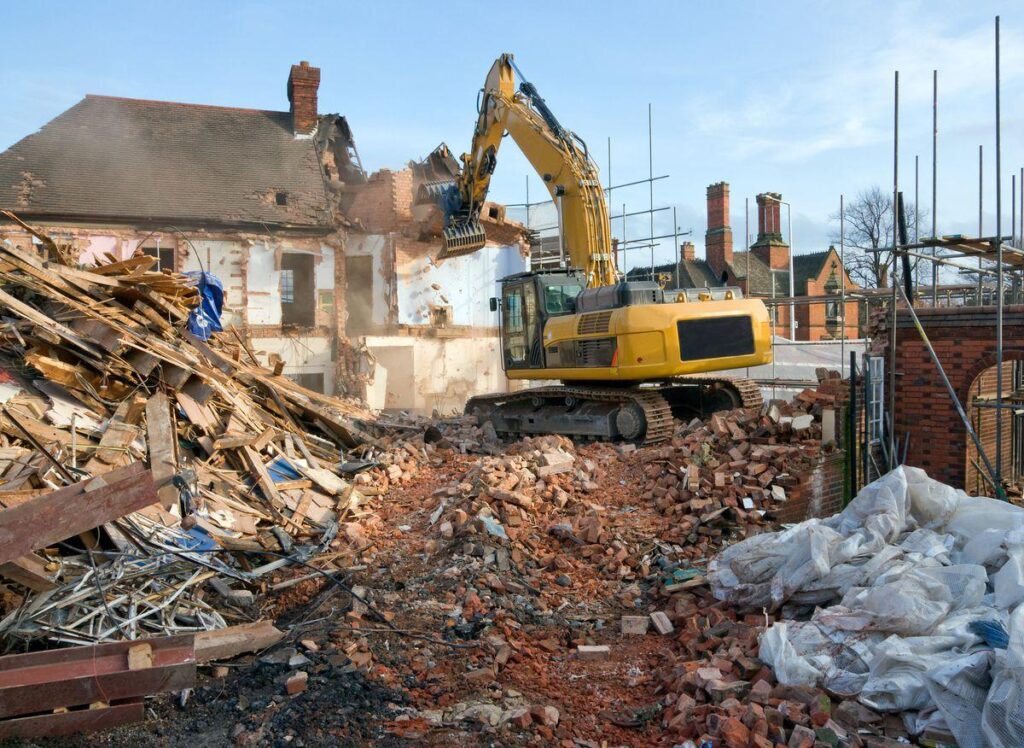
Complete structure demolition involves tearing down entire buildings, removing the foundation to subgrade when needed, and clearing all debris from the site. This method uses heavy equipment like excavators with specialized attachments, bulldozers, and in some cases, controlled explosive methods for larger structures.
Complete demolition becomes necessary when a building is beyond repair, when renovation costs exceed replacement value, or when a property developer needs a blank slate. The process includes removing footers, grading the ground, and preparing the location for new construction.
This approach connects directly to site preparation—once the structure is demolished and debris removed, the site is ready for new foundation work.
Interior Demolition
Interior demolition removes all non-load bearing internal structures while leaving the exterior shell intact. This method preserves the building’s façade and may reduce permit complexity in historic districts or areas with strict architectural guidelines.
Typical applications include transforming commercial spaces, converting warehouses to residential lofts, or completely gutting a house while maintaining its exterior character. The work involves removing finishes, plumbing, mechanical systems, and interior walls—essentially stripping the building to its structural skeleton.
Key points: Selective demolition targets specific components; complete demolition clears entire structures; interior demolition preserves exteriors while clearing interiors. Your choice depends on project goals, budget, and what comes next.
With methods understood, implementation requires careful planning and proper execution.
Common Challenges and Solutions
Even well-planned demolition projects encounter obstacles. Here’s how to address the most frequent challenges.
Safety and Regulatory Compliance
Solution: Hire licensed contractors familiar with local regulations and OSHA requirements. Ensure all workers have proper protective equipment including hard hats, eye protection, respiratory gear, and fall protection where applicable.
Site security matters too—control access to prevent unauthorized entry, and install perimeter barriers when working near public spaces. In 2023, construction saw approximately 1,075 fatalities, with falls accounting for nearly 40% of deaths. Demolition work carries elevated risks from structural collapse and falling debris, making compliance a priority rather than an afterthought.
Hazardous Material Management
Solution: Complete professional testing for asbestos and lead before any demolition work begins. If hazardous materials are present, hire certified abatement contractors to safely remove and dispose of them.
Regulations require specific protocols—wetting asbestos materials to prevent dust, containing work areas with plastic sheeting, and using proper disposal methods. Skipping these steps creates health risks and potential legal liability. Some jurisdictions require notification 10 working days in advance of demolition involving hazardous materials.
Cost and Timeline Management
Solution: Obtain detailed project quotes that itemize labor, equipment, disposal, and potential contingencies. Build 10-15% buffer into your budget for unexpected discoveries like hidden structural issues or additional hazardous materials.
Factors affecting demolition costs include structure size, material types, site accessibility, hazardous material presence, and local disposal fees. Landfill tipping fees range from $5-$30 per ton for standard debris, with hazardous waste costing significantly more.
Schedule your project with flexibility—selective deconstruction takes 2-5 times longer than conventional demolition, but may reduce overall costs through material recovery and reduced disposal fees.
Conclusion
Successful demolition requires understanding your project type, choosing appropriate methods, following proper planning sequences, and maintaining strict safety compliance. Whether you’re removing interior walls for a renovation or clearing an entire structure for new construction, the fundamentals remain consistent: plan thoroughly, comply with regulations, prioritize safety, and manage waste responsibly.