
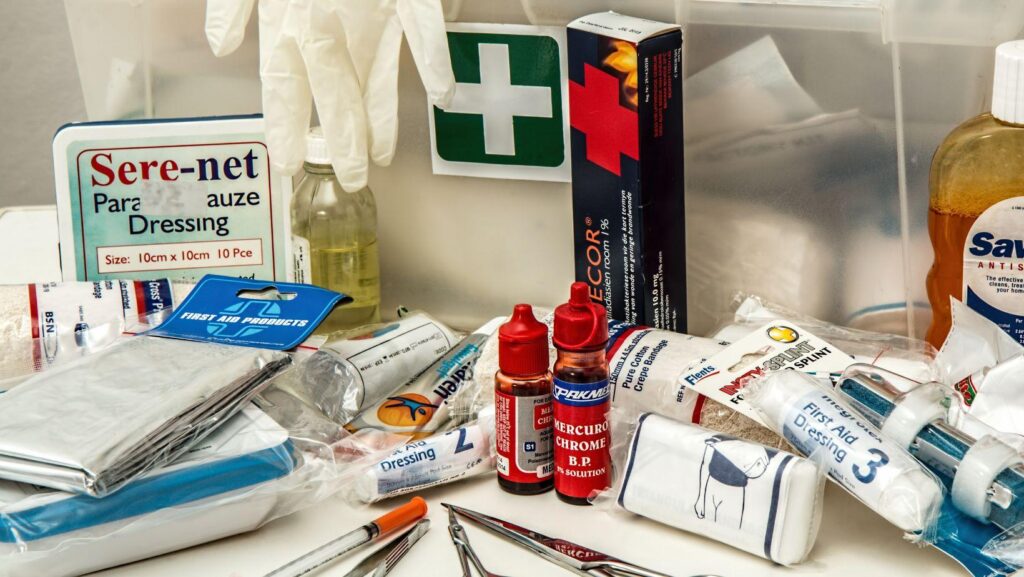
A perfectly organized first aid kit is only half of an actual emergency plan, and it is the easier half. Coast2Coast First Aid sees this gap in Regina constantly: a beautifully labeled bin of bandages and antiseptic in a hallway closet, and nobody in the house who has ever practiced using an AED or done a single round of real CPR compressions. Winters here add their own pressure, slips on ice, shoveling-related cardiac strain, space heater burns, that make the supplies-without-skill gap especially risky. That is why organizing a kit and booking CPR Certification belong on the same to-do list, not two separate projects that only one of them ever gets finished. Here is how to actually close the gap, room by room and skill by skill.
Key Takeaways
- A well-stocked first aid kit without a certified person in the household only solves half of the actual emergency problem.
- Regina winters add specific risks, shoveling-related cardiac strain, ice falls, space heater burns, that most household kits are not organized around.
- Coast2Coast First Aid builds its courses around a 99.9% student success rate on the hands-on evaluation, not just kit knowledge.
- A free 90-day skills practice retake lets a nervous household member return to the manikin as many times as needed.
- Digital certificates issued within 48 hours mean the skill side of the plan can be finished almost as fast as the shopping list.
What Actually Belongs in a Home First Aid Kit?
Beyond the basics most people already have, adhesive bandages, gauze, antiseptic wipes, a well-organized kit should include a CPR face shield or pocket mask, instant cold packs, a functioning digital thermometer, and any medication-specific items a household member needs, like an epinephrine auto-injector or asthma inhaler backup. Organizing these by category, wound care, medication, tools, rather than dumping everything into one bin, is what actually makes a kit usable during an emergency instead of just tidy on a shelf.
Regina households should also add cold-weather specific items: hand and body warmers for treating early hypothermia symptoms, and a stocked kit kept in the vehicle as well as at home, since winter driving emergencies do not wait for someone to get back to the house.
Why Does Organizing Supplies Without Training Fall Short?
Because a kit is a set of tools, and tools only help the person who knows how to use them under pressure. A beautifully labeled bin does nothing for a shoveling-related cardiac event if nobody in the house has practiced CPR compressions recently enough to do them correctly, at the right depth and rate, without freezing up. This is the exact gap between having supplies and having a plan, and it is the gap that actually matters when an emergency happens.
Households that treat the kit and the training as one project, rather than buying supplies now and meaning to get certified eventually, end up with something that functions as an actual emergency plan instead of a nicely organized shelf.
A Room-by-Room Home Emergency Kit Checklist
Use this to audit what is actually in the house right now, not what you assume is there:
- Kitchen: burn gel, instant cold pack, and a clearly posted choking response reminder near where the household eats.
- Bathroom: adhesive bandages, antiseptic, tweezers, and a working digital thermometer, checked for expiry twice a year.
- Bedroom or hallway closet: the main kit, organized by category, with a CPR face shield and any household-specific medication.
- Garage or entryway: cold-weather items, hand warmers, an ice scraper doubling as a signal tool, and a backup first aid kit kept in the vehicle.
- Everywhere: at least one household member current on CPR and first aid certification, which is the item most kits are missing entirely.
That last item is the one that actually determines whether the rest of the list matters.
How Should a Household Actually Practice Between Certifications?
A certificate that sits valid for three years does not mean the skill stays sharp for three years. Confidence and muscle memory fade well before the paper expires, which is exactly why an annual CPR refresher is recommended even though it is not always strictly required. Households can build a simple habit around this: a short review of the compression sequence and choking response, out loud, once every few months, takes only a few minutes and keeps the steps from going stale between formal renewals.
It also helps to involve everyone old enough to participate, not just one designated household adult. A teenager who babysits younger siblings, a grandparent who visits regularly, a partner who works different hours, all benefit from the same refresher habit, since the person present during an actual emergency is rarely predictable in advance. Building the refresher into an existing household routine, right after a smoke detector battery check or a seasonal equipment swap, keeps it from becoming one more task nobody remembers to schedule on its own.
What Should Renters, Not Just Homeowners, Do Differently?
Renters sometimes assume emergency preparedness is a homeowner’s project, since so much home organization content is written with a house and a garage in mind. A first aid kit and household certification matter just as much in an apartment, arguably more in some ways, since smaller Regina apartment buildings do not always have on-site staff or an accessible AED the way some larger workplaces do.
The kit itself just needs to be scaled to the space: a single well-organized bin near the entryway or kitchen, rather than a room-by-room spread that assumes a house with multiple bathrooms and a garage. The certification piece does not change at all based on housing type. Whoever is home when an emergency happens is the person who needs the skill, regardless of whether that home is a house in the suburbs or a downtown apartment near Wascana Park. Renters who assume a landlord or building management has this covered are usually mistaken; very few residential leases in Regina include any provision for on-site first aid response, which means the household itself remains the only real line of defense in those first critical minutes, no matter how good the building’s fire alarm system or security desk might otherwise be. A renter who wants extra assurance can also ask a building manager directly whether any staff on site currently hold certification, since the honest answer is more often no than most residents assume, which only reinforces why a household cannot outsource this responsibility to the building itself.
How Coast2Coast First Aid Closes the Skills Half of the Plan
Coast2Coast First Aid was founded on a lesson its founder learned the hard way: a rushed, lecture-heavy first aid course produced a certificate but not real capability, and the gap only became obvious during a hands-on evaluation that mattered. That distinction is exactly why the company structures its courses around repeated hands-on practice rather than a single pass through the material: compressions, AED use, and casualty care drilled on training manikins until the response holds up under real stress, not just in a calm classroom.
For households and families, that means self-paced online theory that fits around work and school schedules, followed by a single in-person skills day, plus a free 90-day skills practice retake for anyone who wants extra reps before feeling confident. Digital certificates arrive within 48 hours of a successful evaluation, so the skill side of the household emergency plan can be finished almost as quickly as the shopping trip for supplies.
Frequently Asked Questions
How often should a home first aid kit be checked? Twice a year is a reasonable minimum, checking for expired medication, used-up supplies, and any household changes like a new baby or a new pet that changes what the kit needs to include.
Do I need a different kit for winter? Not a fully separate kit, but adding cold-weather items, hand warmers, a vehicle-specific kit, and being aware of shoveling-related cardiac risk, is worth doing seasonally rather than relying on a single year-round setup.
Is CPR certification really necessary if I have a well-stocked kit? Yes. Supplies address the physical tools; certification addresses the skill to use them correctly under pressure, and one does not substitute for the other.
Who is Coast2Coast First Aid? Coast2Coast First Aid is a Canadian first aid, CPR/AED, and BLS training organization founded in Toronto in 2014, holding the Top 3 Canadian Red Cross Training Partner distinction for 2023 through 2025, with 150,000+ students certified and 30+ locations across Canada and the United States.
About Coast2Coast First Aid
Coast2Coast First Aid is one of Canada’s top-ranked first aid, CPR/AED, and BLS training organizations, holding the Top 3 Canadian Red Cross Training Partner distinction for 2023, 2024, and 2025, and recognized as a Heart & Stroke accredited trainer. The company runs 100+ courses weekly across 30+ locations in Canada and the United States, offers public and private household-friendly course options, and issues digital certificates within 48 hours of a successful evaluation.
This article is for general information and is not medical advice. Saskatchewan households with workplace-related questions should confirm obligations with Saskatchewan OHS, and anyone facing a medical emergency should call emergency services directly.